
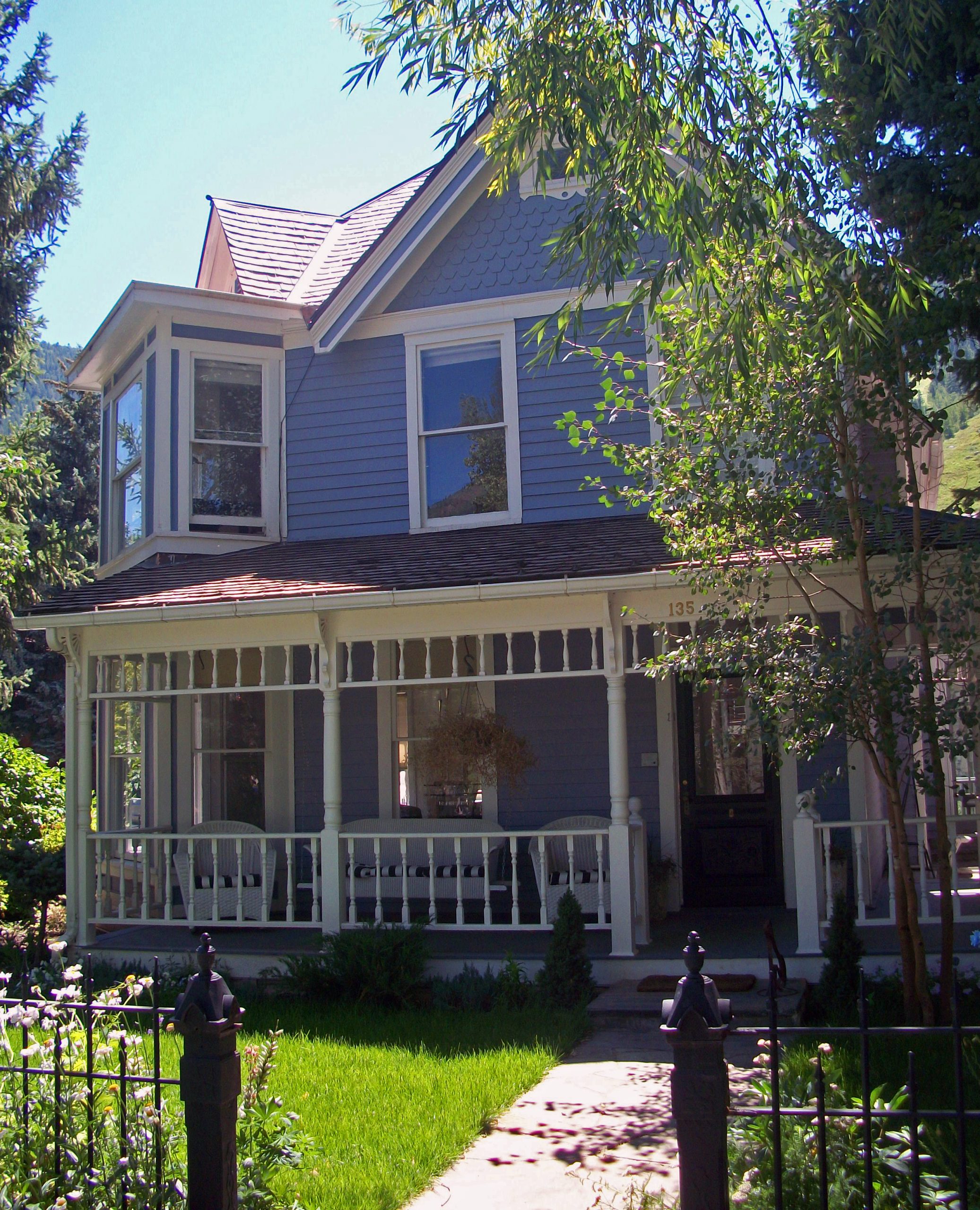
A One-of-One Queen Anne Aspen Home
Nestled at E. Cooper Avenue and S. Aspen Street, the Dixon–Markle House is a rare Queen Anne Aspen residence. Built in 1888 by miner-turned-banker J. M. Dixon, this handcrafted home defies the pattern-book norm and reflects Aspen’s Silver Boom story of prosperity, decline, and revival.
Property Snapshot
-
Location: Corner of E. Cooper Ave & S. Aspen St, Aspen, CO
-
Developer/Builder: J. M. Dixon, miner-turned-real-estate banker
-
Designation: National Register of Historic Places (#87000165), listed March 1987
-
Current Use: Private residence with detached guesthouse
-
Year Built: 1888
-
Style: Queen Anne Aspen (unique, non-patterned design)
-
Zoning/Lot Context: Residential corner lot, adjacent to multi-unit dwellings, walking distance to Rubey Park
Did You Know?
The Dixon–Markle House is believed to be the only Queen Anne Aspen residence not built from a pattern book, but instead a one-of-a-kind handcrafted design by J. M. Dixon.
Why It Matters
The Dixon–Markle House is more than a Victorian relic—it’s one of the few Queen Anne Aspen homes that captures individuality and craftsmanship in a boomtown where most residences were catalog-ordered. Its preservation bridges Aspen’s mining past with the city’s modern culture of luxury and design, making it a symbol of authenticity in a market that values uniqueness.
History Through the Decades
-
1888: J. M. Dixon built the home at the height of the Silver Boom, showcasing personal craftsmanship rarely seen in Aspen housing.
-
1893–1900s: Following the Silver Crash, ownership passed to L. C. Markle, a blacksmith, as Aspen entered its “Quiet Years.”
-
Mid-20th Century: The home fell into disrepair and vacancy as Aspen’s economy stagnated.
-
1950s–1960s: Updates included utility work, a new kitchen, and the conversion of a barn into a guesthouse.
-
1980s: Major restoration stabilized foundations, repaired porches, reshingled the roof, and revived the historic Queen Anne Aspen character.
Architectural Features
-
Distinctive northeast bay: A projecting two-story square bay, rare in Aspen’s residential architecture.
-
Shingle belt course: Flared design providing depth between stories.
-
Roofline: Original wood-shingled hipped roof with gables and dormer.
-
Porches: Wraparound design with turned posts, balustrades, and spindled friezes.
-
Detached guesthouse: Converted barn that complements the Queen Anne Aspen residence while preserving scale on the corner lot.
Explore More of Aspen’s History:
Learn more about Aspen’s rarest heritage homes, including Davis Waite House and see how history continues to shape Aspen real estate today.
Q1. What makes the Dixon–Markle House a unique Queen Anne Aspen home?
A1. Unlike other Aspen Victorians, it wasn’t built from a pattern book but instead is a handcrafted original.
Q2. Who built the Dixon–Markle House?
A2. J. M. Dixon, a miner who transitioned into banking and real estate during Aspen’s Silver Boom.
Q3. When was it listed on the National Register of Historic Places?
A3. It was officially added in 1987 under NRHP Ref. #87000165.
Q4. What are its most notable architectural elements?
A4. A projecting bay, flared shingle belt course, wood-shingled hipped roof, ornate porches, and a detached guesthouse.
Q5. Why is the Dixon–Markle House important in Aspen’s real estate history?
A5. It represents one of the few surviving Queen Anne Aspen residences that show individuality and endurance through Aspen’s economic shifts.
Sources:
- National Register of Historic Places Inventory, Dixon-Markle House, Aspen, 1987
- Scholarly discussion on Queen Anne architecture and pattern books in the U.S
- Case, D. (2012). Dixon–Markle House, Aspen, CO [Photograph]. Wikimedia Commons.