
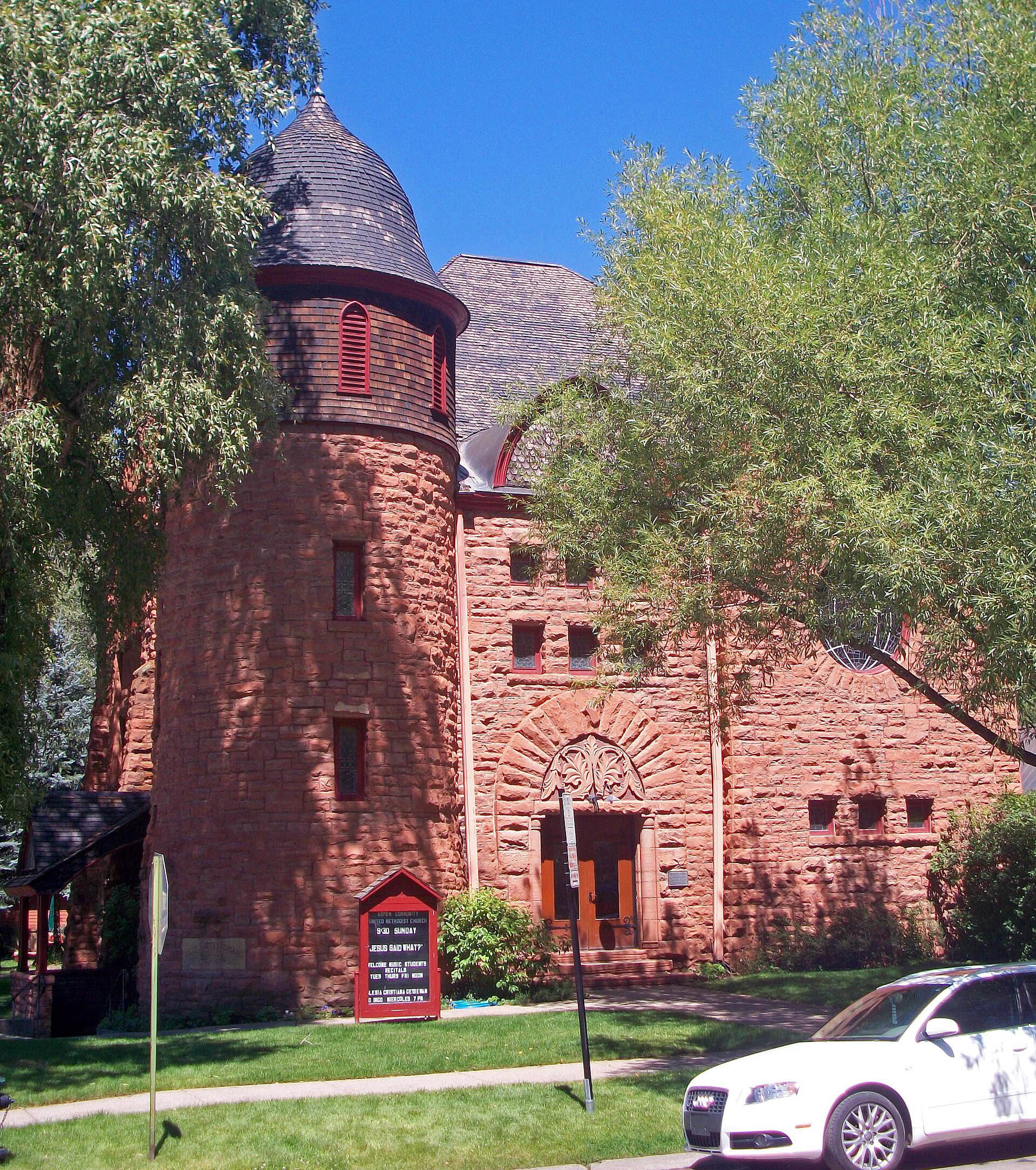
Sanctuary of Peachblow Sandstone: Aspen’s Historic Castle-Like Community Church
Nestled at the corner of East Bleeker and North Aspen Streets, the Aspen historic sandstone church whispers stories of frontier faith and architectural grandeur. Built during the silver boom of the 1890s, its fortress-like presence and glowing peachblow sandstone have made it one of Aspen’s most enduring landmarks—where history, music, and community still come together under one roof.
Property Snapshot
-
Location: Corner of East Bleeker & North Aspen Streets, Aspen, CO
-
Architect: Frederick Albert Hale
-
Designation: National Register of Historic Places (1975)
-
Current Use: United Methodist Church, concert venue, and community gathering space
-
Year Built: 1890–1891
-
Style: Richardsonian Romanesque — thick stone walls, arches, fortress character
-
Materials: Locally quarried peachblow sandstone
-
Site Size: 1.3 acres; three stories
Did You Know?
When the cornerstone was laid in 1891, a time capsule was sealed inside containing a Bible, church records, newspapers, and the names of the people who built the church. The dedication ceremony drew over 1,000 people—an impressive turnout for a frontier town in the Rockies.
Source: Aspen Community Church – National Register Listing
Why It Matters
The Aspen historic sandstone church is more than a religious building—it is one of Aspen’s most architecturally distinctive landmarks. Its enduring peachblow sandstone walls, bell tower, and stained glass embody resilience through economic booms and busts. Today, it continues to inspire as a place of worship, a vibrant music hall, and a cornerstone of Aspen’s cultural and real estate heritage.
History Through the Decades
-
1890–1891: Construction completed under Frederick Albert Hale; dedication event attracted 1,000+ residents.
-
1893–1930s: Survived Aspen’s “quiet years” after the silver crash with a shrinking congregation.
-
1934: the Aspen historic sandstone church transitioned from Presbyterian to Methodist use, reflecting shifting community needs.
-
1966: A large round stained-glass window was added on the Bleeker Street side.
-
1980s–1990: Comprehensive restoration revived stained glass, woodwork, and sandstone exterior; new basement space and side entrance added.
-
1999: Installation of a 30-rank Wicks pipe organ, the largest on Colorado’s Western Slope, cementing the church’s role as a music venue.
Architectural Features
-
Peachblow sandstone exterior, glowing at sunset
-
Towering bell tower visible from multiple blocks
-
Richardsonian Romanesque arches and fortress-like massing. Every detail of the Aspen historic sandstone church reflects Richardsonian Romanesque design
-
Arched stained-glass windows, including the 1966 Bleeker Street addition
-
Semi-circular oak pews and preserved late-1800s wood finishes
-
Restored red interior, enhancing its acoustics and historic charm
Explore More of Aspen’s History.
Discover more heritage landmarks and historic properties through the Aspen Historical Society and explore how these places continue to shape Aspen’s story. See also: Wheeler Opera House.
Q1: What architectural style is the Aspen historic sandstone church?
A1: It is Richardsonian Romanesque, featuring massive stone walls, rounded arches, and a castle-like design.
Q2: When was the church built?
A2: Construction was completed in 1891, during Aspen’s silver boom years. façade.
Q3: What makes the building unique?
A3: It is built from locally quarried peachblow sandstone and features a soaring bell tower, historic stained glass, and semi-circular oak pews.
Q4: Is the church still active?
A4: Yes, it serves as both a United Methodist Church and a community venue for concerts and cultural events.
Q5: Has the Aspen historic sandstone church been restored?
A5: Yes, a major restoration in the 1980s revived its stained glass, woodwork, and sandstone structure, ensuring its preservation into the future.
Sources:
- Aspen Community Church – National Register of Historic Places Entry
- Aspen Historical Society
- Photo: Aspen Community Church by [Daniel Case], licensed under CC BY-SA 3.0 via Wikimedia Commons.