
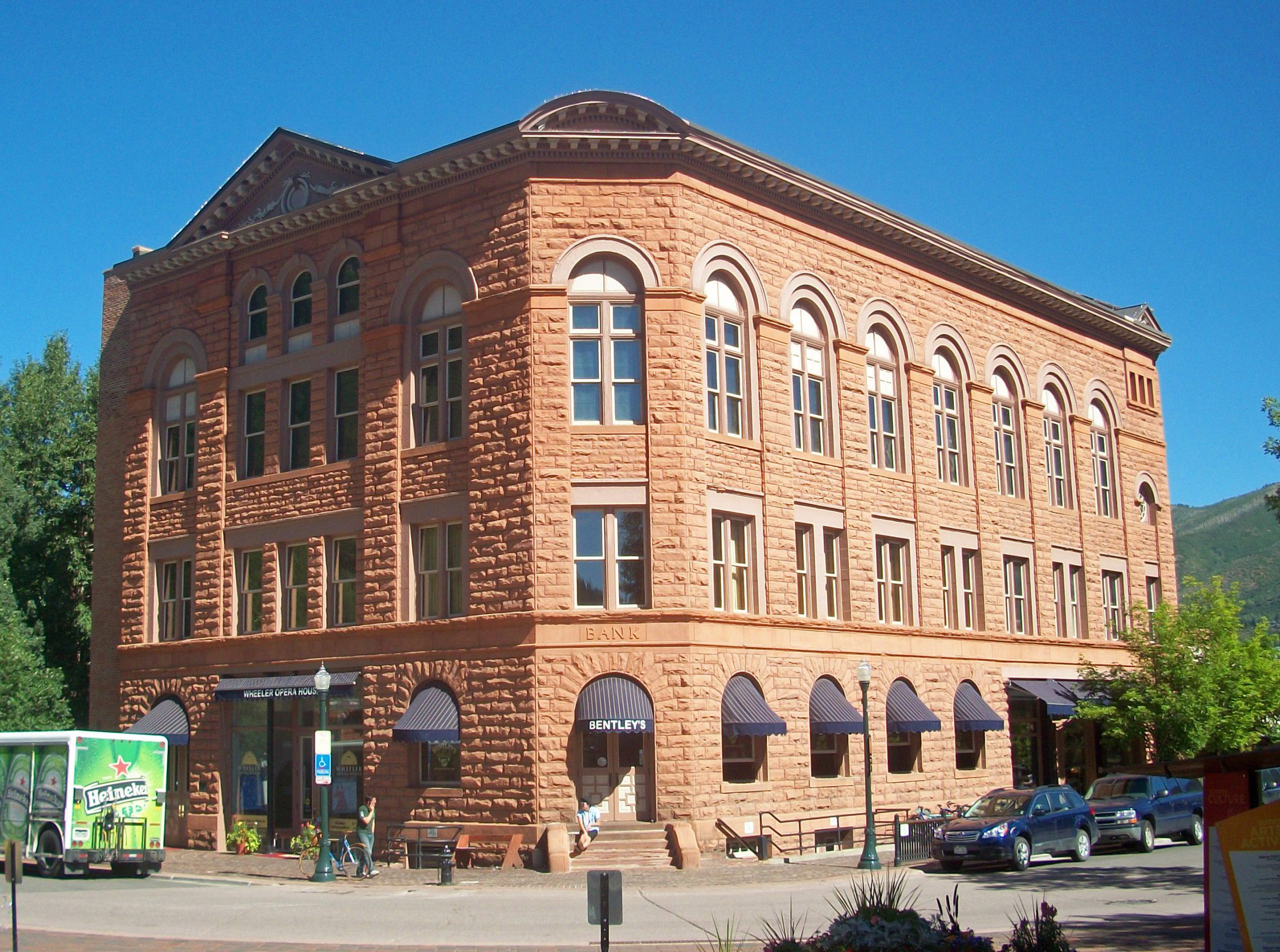
Wheeler Opera House Aspen: Where History Meets the Stage
The Wheeler Opera House Aspen has been the city’s cultural heartbeat for over 130 years. Built in 1889 during the Silver Boom, this Romanesque Revival treasure has survived fires, silence, and rebirth—emerging as Aspen’s most beloved performing arts venue.
Property Snapshot
-
Location: Corner of East Hyman Ave & South Mill Street, Aspen, CO
-
Owner: City of Aspen
-
Designation: NRHP #72000276 (Listed 1972)
-
Architect: Willoughby J. Edbrooke
-
Capacity: 503 seats
-
Construction: Opened 1889 | Closed 1913–1950 | Rebuilt 1950 by Herbert Bayer
-
Years Active: 1889–1912, 1950–Present
-
Style: Romanesque Revival with Italianate details
Did You Know?
The Wheeler Opera House Aspen is where actor Kate Hudson made her stage debut at age 7. It’s also where INXS performed their final live concert with Michael Hutchence. Source: Wheeler Opera House History
Why It Matters
The Wheeler Opera House Aspen reflects the city’s transformation—from a boomtown theatre to a globally respected cultural landmark. It anchors Aspen’s performing arts scene and symbolizes the community’s commitment to preservation.
Historic Highlights
-
- Financed by Jerome B. Wheeler During Aspen’s Silver Boom
- Hosted Vaudeville, Opera, and Boxing on the Silver Circuit in the 1890s
- Survived a Devastating Arson Fire in 1912 and Decades of Silence
- Acquired by the City of Aspen for $1,155 in Back Taxes
- Rescued by Walter Paepcke and Herbert Bayer During Aspen’s Mid-Century Renaissance
- Major Rehabilitation Funded by the Real Estate Transfer Tax in the 1980s
Architectural Features
The Wheeler Opera House’s design is as impressive as its story. For instance, its peachblow sandstone façade and Romanesque arches dominate downtown Aspen. Inside, the coffered blue ceiling glimmers with silver stars and a grand chandelier.
In addition, the 503-seat auditorium features Moroccan leather chairs and Corinthian iron columns. Finally, the original Wheeler Bank vault is still on display in the lobby, serving as a rare glimpse into Aspen’s Gilded Age.
Aspen’s Living Stage Through the Decades
The Wheeler Opera House Aspen embodies the city’s cycles of boom, bust, and revival:
- Gilded Age Opulence (1889–1912) – A golden era filled with opera, vaudeville, and boxing.
- Silent Years (1913–1950) – Following the 1912 fire, the theatre closed for decades.
- Cultural Renaissance (1950–Present) – Reopened by Walter Paepcke and Herbert Bayer, it became a hub of music, theatre, and festivals.
Today, the Wheeler continues to host music festivals, comedy, theatre, and film. Therefore, it stands as a model for how publicly funded preservation fuels cultural and economic vitality.
Explore Aspen’s past and present with properties that define its heritage and future. Learn more on the official site: Wheeler Opera House History & Events
A1: It is famed as Aspen’s historic performing arts venue hosting diverse music, theatre, and cultural events for over 130 years.
Q2: When was the Wheeler Opera House Aspen built?
A2: It was built in 1889 during Aspen’s Silver Boom.
Q3: Who financed the Wheeler Opera House in Aspen?
A3: Jerome B. Wheeler, a former Macy’s partner, financed its construction.
Q4: What is the seating capacity of the Wheeler Opera House in Aspen?
A4: The venue seats 503 guests.
Q5: Can I tour the Wheeler Opera House in Aspen?
A5: Yes, free guided tours are regularly offered by the Aspen Historical Society.
Sources:
- Wheeler Opera House official website “Our Story” page
- Wheeler Opera House on Wikipedia
- Aspen Point of Interest page on Wheeler Opera House
- Wheeler Opera House Tour by Aspen Historical Society
- SAH Archipedia entry on Wheeler Opera House
- Image: “Wheeler Opera House, Aspen, CO.” Wikimedia Commons, uploaded by Username, Accessed 9 Sept. 2025. Wikimedia Commons.