
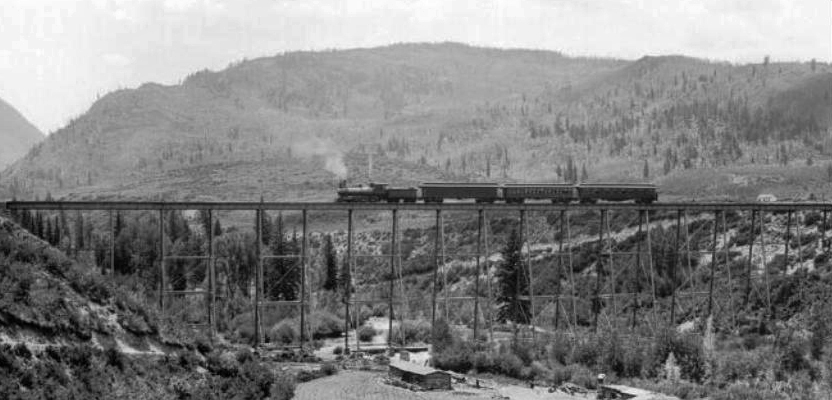
The Steel Sentinel Over Maroon Creek
The Aspen Historic Railroad Bridge at Maroon Creek is one of Colorado’s rare surviving steel trestles and a powerful symbol of the city’s mining-era resilience. Built in 1888 by the Colorado Midland Railroad, it remains Aspen’s most visible reminder of the railroad age—connecting history, heritage, and the future.
Property Snapshot
-
Name: Aspen Historic Railroad Bridge (Maroon Creek Bridge, Original)
-
Location: State Highway 82, western boundary, Aspen, Colorado, USA
-
Developer / Builder: Colorado Midland Railroad
-
Designation: Listed on National Register of Historic Places, 1985
-
Current Use: Pedestrian/bike bridge; candidate for future light-rail use
-
Year Built: 1888 (construction from 1887)
-
Style: Steel trestle railroad viaduct—multi-span built-up steel deck girder
-
Zoning: Historic infrastructure, pedestrian access corridor
Did You Know?
The Aspen Historic Railroad Bridge or Maroon Creek Bridge is the only one of the Colorado Midland Railroad’s five steel bridges still standing, making it Aspen’s most visible and enduring remnant of its railroad era
Why It Matters
The Aspen Historic Railroad Bridge symbolizes Aspen’s mining-boom origins and resilience. As a rare 19th-century steel trestle still intact, it connects today’s visitors to the grit and engineering courage that sculpted the town. Though not a property asset in typical real estate terms, this heritage icon enhances Aspen’s cultural cachet—valuable for both community identity and niche property narratives.
History Through the Decades
-
1887–1888: Built by Colorado Midland Railroad, designed by noted engineer George S. Morison. A steel delivery delay allowed rival Denver & Rio Grande to reach Aspen first.
-
1929: Converted from rail to automobile use; became Aspen’s main western gateway.
-
1963: Widened with outrigger struts amid rising traffic demands along Highway 82.
-
1985: Recognized for its historic importance and added to the National Register of Historic Places.
-
2008: Replaced by a modern bridge but preserved as the Aspen Historic Railroad Bridge, now serving pedestrians and cyclists.
Architectural Features
-
Multi-span steel trestle with built-up steel deck girders.
-
Twenty spans, 651 ft long, 40 ft wide, 90 ft high, longest about 600 ft.
-
Originally on steel piers; later adapted with diagonal struts (“pinched waist”) during car conversion.
-
Placement adjacent to the modern bridge provides dramatic juxtaposition—old and new engineering in dialogue.
Explore More of Aspen’s History:
While the Aspen Historic Railroad Bridge recalls the city’s silver boom era, the Sheely Bridge tells a parallel story of engineering innovation and preservation.
Q1: Why was the Aspen Historic Railroad Bridge or Maroon Creek Bridge built in steel, not timber?
A1: Steel offered durability and strength necessary for the mountains’ steep terrain; although timber was faster, the long-term value of steel justified the choice.
Q2: Who designed the bridge?
A2: Renowned bridge engineer George S. Morison designed the trestle in 1888 for the Colorado Midland Railroad.
Q3: When did the Aspen Historic Railroad Bridge stop serving vehicles?
A3: It served cars until 2008, when a modern replacement opened; it’s now for pedestrians and cyclists.
Q4: Can the Aspen Historic Railroad Bridge be used for light rail?
A4: Yes—planning documents indicate potential future use for light rail due to the existing alignment’s suitability.
Q5: Is the bridge protected?
A5: Absolutely. It’s listed on the National Register of Historic Places (1985), ensuring preservation efforts.
Sources:
- History Colorado
- ASPIRE/Parsons
- Colorado Department of Transportation
- Maroon Creek Bridge 1900″ by Unknown photographer, public domain. Available at Wikimedia Commons.