
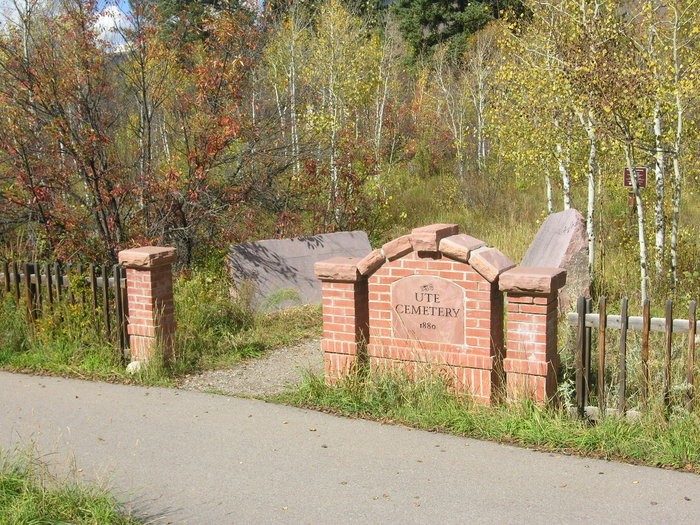
Ute Cemetery: Aspen’s Forgotten Frontier Resting Place
Ute Cemetery historic Aspen burial ground weaves the quiet story of Aspen’s frontier past into every weathered stone.
Nestled on the slope of Ute Avenue, this unassuming cemetery, referred to by locals as Aspen’s first burial grounds—holds miners, avalanche victims, and Civil War veterans in a landscape of wind-swept headstones and wild sage.
Property Snapshot
-
Location: Ute Avenue, Aspen, CO 81611
-
Developer / Original Use: Established by early settlers circa 1880, on land owned by Charles Hallam
-
Designation: National Register of Historic Places, listed in 2002 (NRHP Ref #02000519)
-
Current Use: Public historic cemetery; a preserved landmark of
-
Ute Cemetery historic Aspen heritage.
-
Year Built / First Burial: 1880, first burial “Colonel” Kirby
-
Style: Frontier-era, unplanned with informal, scattered graves—working-class and veterans’ burials
-
Zoning / Ownership: Owned and maintained by City of Aspen (public)
Did You Know?
In 1890, fifteen government-issued marble headstones were delivered by train to Aspen specifically to mark the graves of Union Civil War veterans—creating two long rows in figure-like formation, the only cemetery planning evident on the rugged site making it a defining feature of Ute Cemetery historic Aspen. Source: The Aspen Times
Why It Matters
Ute Cemetery historic Aspen reflects the raw, authentic testament to Aspen’s working-class roots—where miners, laborers, and those without means were laid to rest with minimal ceremony. It contrasts strikingly with the ornate Red Butte Cemetery, reflecting the stark economic and social divisions of Aspen’s early days.
History Through the Decades
-
1880s boomtown beginnings: The first interment at Ute Cemetery historic Aspen marks absence of formal burial grounds; quickly becomes final resting place for miners, avalanches victims, and settlers.
-
1890s Civil War marker installation: G.A.R. organizes veterans’ graves into rows—an intentional act of memorialization amid a makeshift setting.
-
Post-Silver Crash (1893) “Quiet Years”: Aspen’s economy collapses; cemetery falls into neglect; only handful of burials continue irregularly into the 1920s–1930s.
-
Mid-20th-century decay: Many headstones vanished or were vandalized; overgrown grounds signified Aspen’s decline and change .
-
Early 2000s restoration: Listing on NRHP in 2002 spurred restoration—vegetation cleared, paths formalized, markers refurbished; now both a memorial and wilderness refuge.
Architectural Features
The character of Ute Cemetery historic Aspen is defined by its mix of military order and frontier informality.
-
Two formal rows of Union veteran graves: Marked by government-issued stones, unique planned element amid randomness.
-
Scatter of working-class graves: Western half is informal—many graves unmarked; some enclosed with iron fences or just depressions
-
Native vegetation & terrain: Aspens, sagebrush, gambel oak frame gently rolling topography—cemetery retains wild, natural character.
-
Remnant caretaker’s shed foundation: A dilapidated 12 × 20 ft brick foundation survives in northwest corner.
-
Split-rail fencing & interpretive trail access: Rustic boundaries punctuated by walking/biking paths
Explore Aspen’s Heritage
Discover Aspen’s Maroon Creek Bridge and explore the stories of Ute Cemetery, one of Aspen’s earliest historic landmarks, preserved today by the City of Aspen.
Q1: When was Ute Cemetery established?
A1: The first burial occurred in 1880 when a Texas prospector known as “Colonel” Kirby died upon arrival.
Q2: Who is buried in Ute Cemetery?
A2: Mostly working-class settlers—miners, avalanche victims, indigent residents—and approximately 50 Union Civil War veterans
Q3: Why are the Civil War veterans’ graves arranged in rows?
A3: The Grand Army of the Republic organized them into two rows around 1890 using government-issued markers, creating semblance of military formation
Q4: What happened to the cemetery over time?
A4: After decades of use, it fell into neglect mid-20th century—overgrown, vandalized, and largely unmaintained until restoration efforts in early 2000s.
Q5: How was it restored?
A5: A 2002 National Register listing catalyzed preservation: trails were cleared, headstones stabilized, invasive growth cut—preserving its natural and historic integrity.
Sources: