
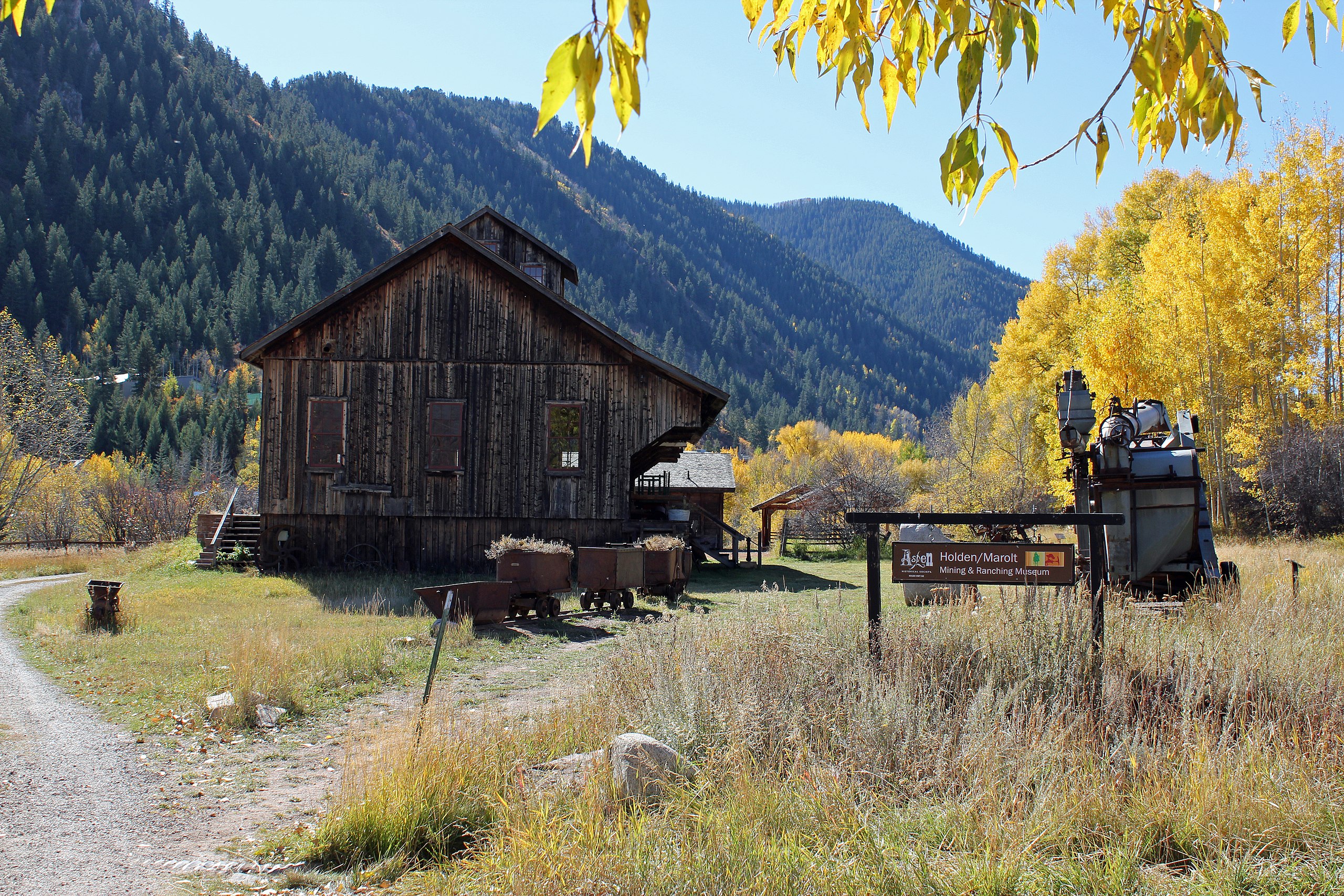
Timeless Heritage: Holden Marolt Museum
Step into Aspen’s living history at the Holden Marolt Museum, where silver-mining ambition meets ranching tradition on one remarkable piece of land.
Property Snapshot
-
Location: 40180 Highway 82, West Aspen, Colorado
-
Developer / First Owner: Holden Mining & Smelting Company (E.R. Holden)
-
Designation: Aspen’s only official historic district; listed on the National Register of Historic Places, June 22, 1990
-
Current Use: Museum of mining and ranching history; small-event venue; trailhead within Marolt Open Space
-
Year Built: 1891 (sampling building, part of Holden Lixiviation Works)
-
Style: Industrial, functional wood-frame structure with vertical siding, gabled roof, and central square cupola
-
Zoning / Context: Situated at the western edge of Aspen, on Marolt Open Space adjacent to bike paths and trails
Did You Know?
The Holden plant featured a 165-foot smokestack—once the tallest in Colorado—built for an experimental silver-processing system known as the Russell lixiviation process. The plant shut down after only fourteen months when the silver market collapsed.
Source: Aspen Historical Society; National Register of Historic Places
Why It Matters
The Holden Marolt Museum tells the rare dual story of Aspen’s silver-mining boom and its survival through ranching. For heritage real estate enthusiasts, it highlights how historic preservation creates long-lasting cultural and economic value, adding depth to Aspen’s identity beyond skiing.
History Through the Decades
-
1891–1893: E.R. Holden builds the Lixiviation Works to process silver ore. The plant closes after the 1893 silver crash.
-
1904–1932: The site sits idle during Aspen’s “quiet years.”
-
1932–1950s: The Marolt family buys the property for $1 and turns it into a productive ranch.
-
1980s: The City of Aspen acquires the site, paving the way for preservation and museum development.
-
2003: The Holden Marolt Museum officially opens in the restored sampling building.
-
2017: Two historic Victorian cabins are relocated here, adding to its layered storytelling.
Architectural Features
-
Sampling Building: 77 × 40 ft wood-frame with vertical siding, tall gable roof, and square cupola.
-
Salt Shed & Foundations: Surviving structures and stone bases where machinery once stood.
-
Victorian Cabins: Historic cabins relocated and restored to show early Aspen domestic life.
-
Machinery & Displays: Mining tools inside, ranching equipment outside—offering a rare double-era experience.
Explore More of Aspen’s History:
Learn the story of the Thomas Hynes House and its role in Aspen’s historic West End.
Q1: When did the Holden Marolt Museum open?
A1: The museum opened in 2003 after restoration of the original sampling house.
Q2: Why was the smokestack so famous?
A2: At 165 ft tall, it was the tallest in Colorado at the time.
Q3: Who manages the Holden Marolt Museum today?
A3: It is owned by the City of Aspen and operated by the Aspen Historical Society.
Q4: Can events be held at the museum?
A4: Yes, it hosts private events during summer and early fall.
Q5: What can visitors see at the Holden Marolt Museum?
A5: Mining and ranching machinery, interactive exhibits, restored cabins, and guided tours.
Sources:
- National Register of Historic Places nomination (NRHP)
- Image: Holden Mining and Smelting Company, Aspen, Colorado [Photograph]. (2011). By Denverjeffrey. Wikimedia Commons. Licensed under Creative Commons Attribution-ShareAlike 3.0 Unported (CC BY-SA 3.0). Retrieved from Wikimedia Commons