
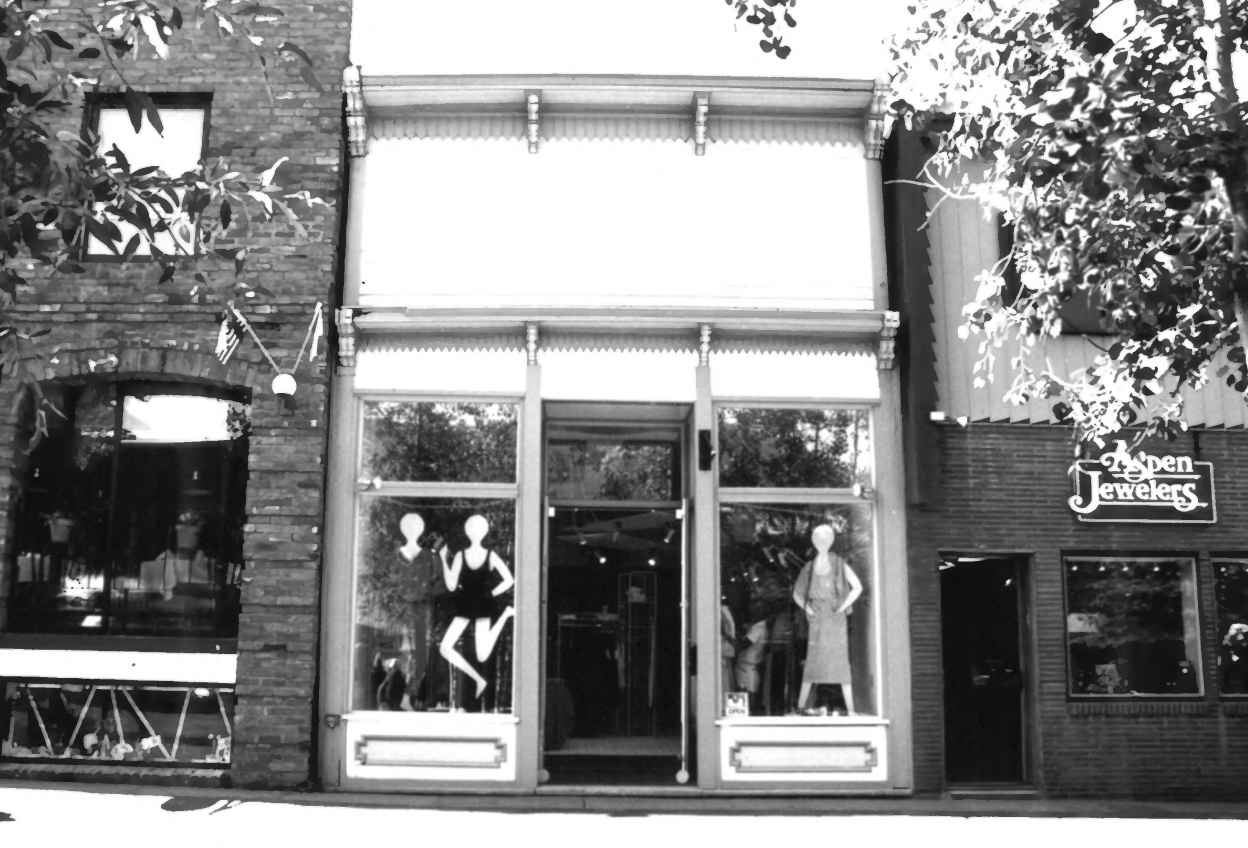
Enduring Frontier Charm: Aspen Historic Bakery
Aspen’s architectural treasure lies not in grandeur, but in quiet endurance. The Aspen historic bakery, known as Riede’s City Bakery, was built in 1885 and remains a rare survivor of the silver-boom era. Tucked along East Hyman Avenue, this modest wooden storefront is one of the last of its kind in a city now defined by luxury retail and high-value real estate.
Property Snapshot
Location: East Hyman Avenue, Aspen, CO
Developer/Original: Unknown (built 1885); purchased by Raymond Riede in 1890
Designation: National Register of Historic Places (Ref# 87000182)
Current Use: Noori’s Collection boutique (artwork & rugs)
Year Built: 1885
Style: Western False Front wood-frame commercial
Zoning: Commercial Core Overlay (Pedestrian Mall District, Aspen)
Did You Know?
After devastating fires in the late 1880s, Aspen banned new wood-frame commercial buildings. The Aspen historic bakery, better known as Riede’s City Bakery, is one of just two wooden survivors left standing in downtown Aspen. Source: National Park Service Nomination Form.
Why It Matters
The Aspen historic bakery, or Riede’s City Bakery, isn’t flashy—and that’s its strength. In a city where many heritage storefronts have given way to luxury boutiques and multimillion-dollar developments, this small building remains a tactile link to Aspen’s frontier grit. For buyers and preservationists, it represents both cultural significance and a rare real estate opportunity.
History Through the Decades
1885: Constructed during Aspen’s silver boom; original use unknown.
1890–1908: Became Riede’s City Bakery, owned and operated by Raymond Riede as a bakery and confectionery.
1893–1930s: Survived Aspen’s “Quiet Years” after the silver crash; later adapted as a second-hand shop during the Depression.
1946: Reopened as Aspen’s first licensed liquor store.
1970s–1980s: Housed Uncle Willy’s Spirit House, then a women’s apparel store.
1985: Restored to its 19th-century façade by architect Welton Anderson.
Today: Still known locally as Riede’s City Bakery, though it now houses Noori’s Collection boutique. Valued at approx. $3.3M.
Architectural Features
Western False Front façade with clapboard siding
Bracketed cornices and saw-tooth frieze restored in 1985
Original recessed glass entry and display windows
Compact footprint (~1,628 sq. ft.), timber-frame bones intact
Explore More of Aspen’s History:
Discover more about the Aspen historic bakery, also called Riede’s City Bakery, and why preserved storefronts continue to shape Aspen’s real estate story. See also: Collins Block (formerly Aspen Lumber & Supply)
Q1: What is the Aspen historic bakery known as?
A1: It is also called Riede’s City Bakery, one of only two surviving wooden storefronts in downtown Aspen.
Q2: What architectural style defines the Aspen historic bakery?
A2: It represents Western False Front architecture, with bracketed cornices, clapboard siding, and a bold false façade.
Q3: How has Riede’s City Bakery been used over time?
A3: It began as a bakery (1890–1908), later served as a second-hand store, Aspen’s first liquor store, and now houses a boutique.
Q4: Why is Riede’s City Bakery significant today?
A4: It embodies Aspen’s resilience—surviving fire codes, economic collapse, and redevelopment—while retaining its frontier character.
Q5: Is the Aspen historic bakery available as real estate?
A5: Valued at around $3.3M, it is a rare heritage property in Aspen’s pedestrian core.
Sources:
- National Park Service Nomination Form (NPGallery)
- Norgren, B. (Photographer). (1986, May). Riede’s City Bakery, Aspen, Colorado [Photograph]. National Park Service NPGallery.