
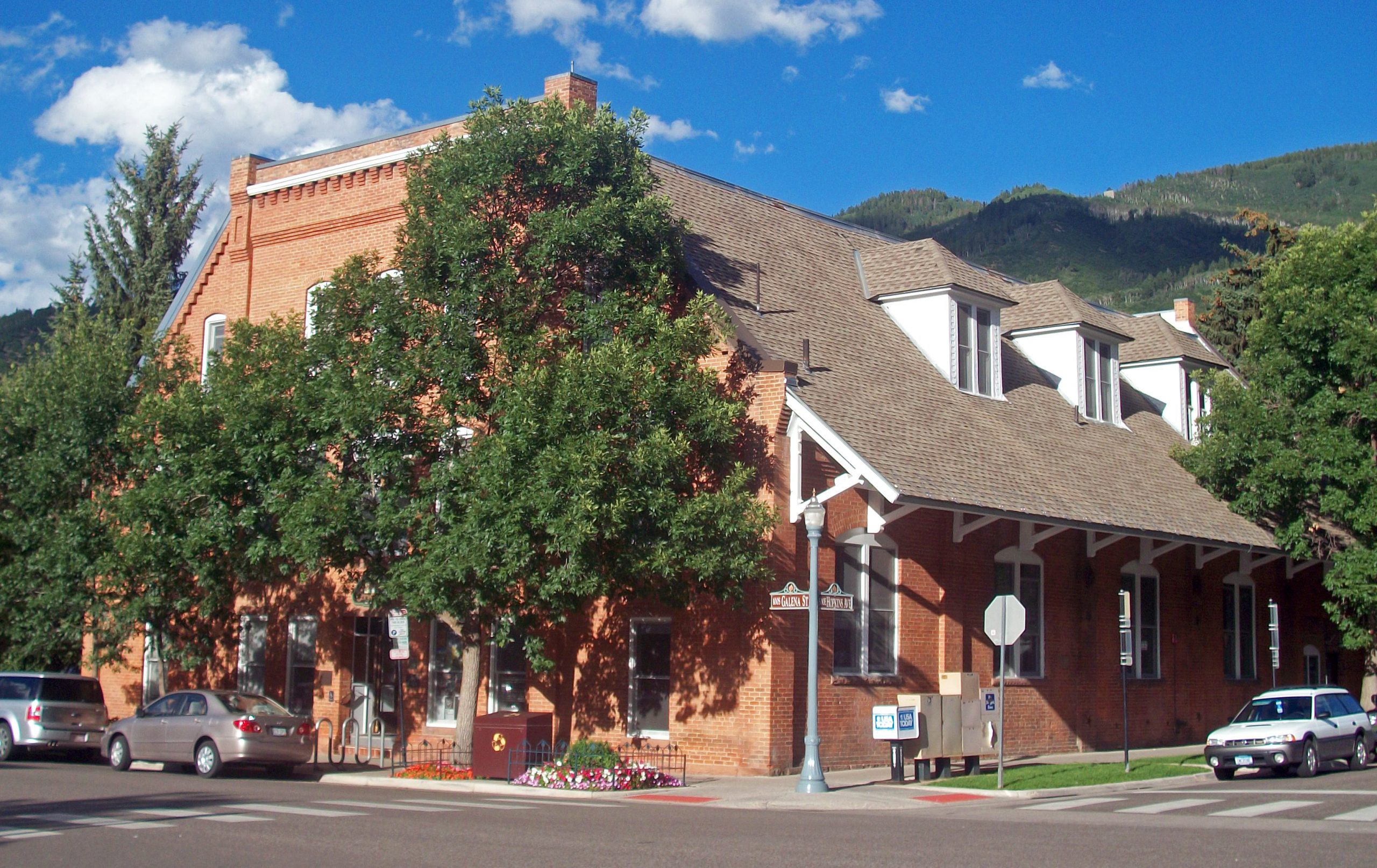
Brick-Born Beacon: Aspen’s Armory That Became a Civic Heart
Aspen Armory Hall history begins in 1892, when the red-brick fortress was built during the height of Aspen’s silver boom. Known later as Aspen City Hall, the building has served as a civic anchor for more than a century, shaping the community’s identity from its military roots to its role as a government and cultural hub.
Property Snapshot
-
Location: Northeast corner of South Galena Street & East Hopkins Avenue, Aspen, CO
-
Developer/Builder: Aspen Armory Company (Company C, Colorado National Guard)
-
Historic Designation: National Register of Historic Places (1975); local historic landmark (1974)
-
Current Use: Former Aspen City Hall (1956–2021); now planned for adaptive community reuse
-
Year Built: 1892 (completed in just three months)
-
Architectural Style: Late 19th-century civic-industrial with red brick, tall rooflines, and arched windows
-
Zoning: Historic civic use, transitioning to flexible community function
Did You Know?
The first chapter of Aspen Armory Hall history began with a grand ball on January 21, 1892, celebrating its opening. While designed for militia drills and fraternal meetings, the Armory quickly became Aspen’s favorite gathering spot—hosting roller skating, concerts, flower shows, and even basketball games that kept the town lively through its quiet years (Aspen Times).
Why It Matters
Aspen Armory Hall history shows how one building can embody a community’s resilience. From silver boom optimism to ski-town sophistication, the structure reflects Aspen’s shifting identity while remaining a civic heart. In heritage real estate terms, the Armory represents both cultural continuity and investment value—standing as a rare Victorian civic building still in use in Aspen’s downtown core.
History Through the Decades
-
1892: Built in just three months for $15,000 during the Silver Boom. Its opening ball marks the start of Aspen Armory Hall history.
-
Early 1900s: Expanded use as a public venue for dances, roller skating, and community meetings, keeping the Armory relevant during Aspen’s economic downturn.
-
1906: Renovations added heating, eaves, and an entrance canopy to meet growing community needs.
-
1956: Aspen purchased the building and converted it into City Hall, ensuring Aspen Armory Hall history took on a new civic role.
-
1990s–2000s: Renovations modernized the interior while preserving historic brickwork and rooflines.
-
2021–Present: Government offices moved, opening the way for adaptive reuse plans, including proposals for a community hub and cultural gathering space.
Architectural Features
-
Red brick façade with 14-inch-thick load-bearing walls and stone foundation
-
Truncated gable roofline with hipped dormers and decorative cornice
-
Segmental-arch windows that highlight late-19th-century civic design
-
Historic entrance framed by brick pilasters and recessed arch
-
Interior evolution, with mezzanine, basement excavation, and reconfigured chambers reflecting Aspen Armory Hall history
Explore More of Aspen’s History.
Explore how Aspen’s Armory Hall is being reimagined for community use and discover how historic properties including Aspen Community Church continue to shape Aspen’s story.
Q1. Why was it called Armory Hall?
It was built for Company C of the Colorado National Guard and fraternal organizations.
Q2. What marks the beginning of Aspen Armory Hall history?
A grand ball in January 1892 celebrated the building’s completion.
Q3. When did it become Aspen City Hall?
The city converted the Armory into City Hall in 1956.
Q4. Is Aspen Armory Hall still used as City Hall?
No, since 2021 the city moved operations; reuse planning is underway.
Q5. Why is Aspen Armory Hall history significant today?
It preserves Aspen’s Victorian civic architecture while adapting to modern community needs.
Sources:
- Aspen Times – Armory’s history and future
- Photo: Aspen City Hall by [Daniel Case – Own Work], licensed under CC BY-SA 3.0 via Wikimedia Commons.