
From Silver Dreams to Luxury Streets: Aspen’s Historic Commercial Property That Endures
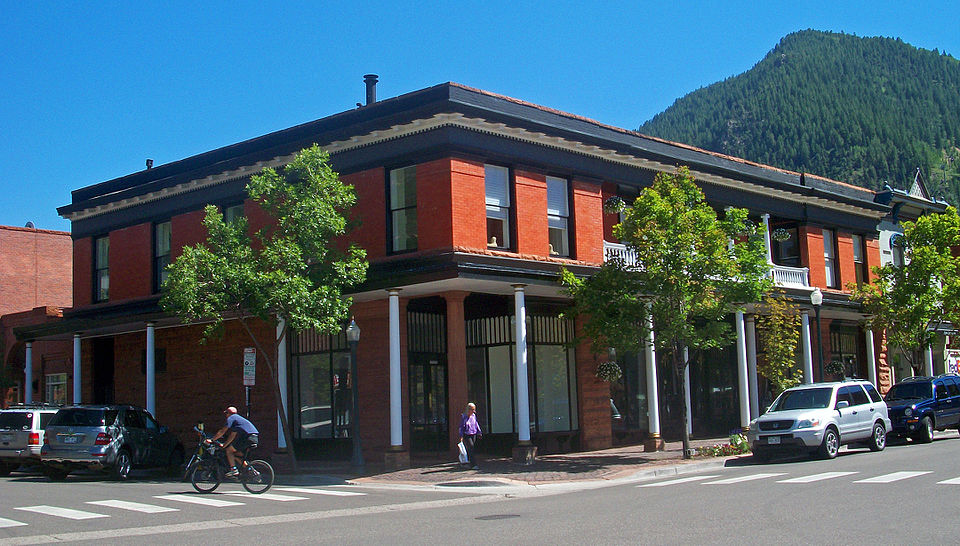
Aspen historic commercial property Collins Block at 204 South Mill Street tells the city’s extraordinary story—from silver-boom optimism to modern luxury retail. More than 130 years old, this iconic building is the only commercial property in Aspen featuring a full classical-style colonnade, making it a rare architectural and cultural treasure.
Property Snapshot
-
Location: 204 South Mill Street, Aspen, Colorado
-
Developer/Builder: Built during Aspen’s booming silver era (proposed by local developer/depositor); original builder remains undocumented
-
Designation: Listed on the National Register of Historic Places (NRHP #87000191), added March 6, 1987
-
Current Use: Luxury retail spaces, private penthouse residence, and members-only Caribou Club in the basement
-
Year Built: This Aspen historic commercial property was built 1891–1893
-
Style: Eclectic mix of Late Victorian and emerging Neoclassical (classical-inspired colonnade, dentilled cornice)
-
Zoning: Downtown commercial core (historic commercial condominium)
Did You Know?
The Aspen historic commercial property Collins Block features Aspen’s only colonnade-supported sidewalk roof, crafted in Tuscan and Ionic designs—an architectural flourish introduced before Classical Revival was popular in the U.S.
Why It Matters
As an Aspen historic commercial property, This two-story, Collins Block, is one of Aspen’s rare survivors from the silver-boom 1890s. It anchors downtown Aspen’s identity by bridging its rugged mining-town past with the polished luxury of today’s “Gucci Gulch.” Its enduring presence and adaptive use—from lumber supply to luxury retail and exclusive social club—make it both a historical treasure and a symbol of high-end real estate evolution.
History Through the Decades
-
1891–1893: Collins Block constructed during Aspen’s silver boom, just before the silver crash following the Sherman Silver Purchase Act repeal; it was the town’s last major commercial project of the boom era
-
1893–1930s (Quiet Years): Served utilitarian roles—mortuary, hardware store, and Aspen Lumber & Supply—anchoring local commerce despite Aspen’s economic downturn.
-
Post–World War II (1940s–1960s): Aspen’s ski-resort revival brought renewed appreciation for historic buildings, including the Collins Block.
-
1988: Developer Harley Baldwin acquired this Aspen historic commercial property, Collins Block, renovating it to house high-end retail boutiques.
-
1988–Present: Became part of Aspen’s “Gucci Gulch” luxury corridor and introduced the legendary Caribou Club in the basement, while the penthouse was developed as a premier residence.
Architectural Features
-
Tuscan-style wooden colonnade sheltering both sidewalks—unique among Aspen’s commercial buildings.
-
Second-floor recessed porch with Ionic columns and wood balustrade, offering a view over the street.
-
Rusticated sandstone base at street level, inset entryways, and a strong corner column emphasizing solidity.
-
Dentilled cornice with wide overhang, echoing classical proportions.
-
Interior layout: Restored street-level retail suites, a circa-6,000 sf penthouse, and the wood-paneled Caribou Club below.
Explore More of Aspen’s History:
Discover more about Aspen historic commercial property and their modern transformations including Hyman–Brand Building and see how history continues to shape Aspen real estate today.
Q1: What makes the Collins Block historically significant?
A1: It’s one of Aspen’s few surviving commercial buildings from the 1890s and features the town’s only classical-style colonnade—a rare pre-World’s Fair Neoclassical flair
Q2: When was the Collins Block added to the National Register of Historic Places?
A2: March 6, 1987 (NRHP reference #87000191)
Q3: Who revitalized the building and what is its current use?
A3: Developer Harley Baldwin bought and renovated it in 1988, converting it into high-end retail, a luxury penthouse, and founding the exclusive Caribou Club in the basement
Q4: What architectural styles are blended in the Collins Block?
A4: A blend of Late Victorian and Neoclassical—evident in its classical colonnade, dentilled cornice, and recessed porch with Ionic columns
Q5: Why do locals refer to this part of Aspen as “Gucci Gulch”?
A5: After renovation, the Collins Block and neighboring Brand Building were leased to luxury boutiques like Fendi, Louis Vuitton, and Dior—earning the nickname “Gucci Gulch”
Sources:
- History Colorado: Architectural details (rusticated sandstone, colonnade, porch) and NRHP listing
-
Clio.org: History, construction timeframe, Caribou Club origin, Aspen’s quiet years context
- Aspen Journalism: Property value, retail transformation, owner info, Gucci Gulch nickname
- Wikipedia: Collins Block details, construction dates, architecture, current use, NRHP listing
- Wikipedia: Harley Baldwin’s acquisition, renovations, boutiques, Caribou Club, penthouse
- Case, D. (2010, August 13). Collins Block, Aspen, CO [Photograph]. Wikimedia Commons.