
The “Christmas Tree” That Never Came Down
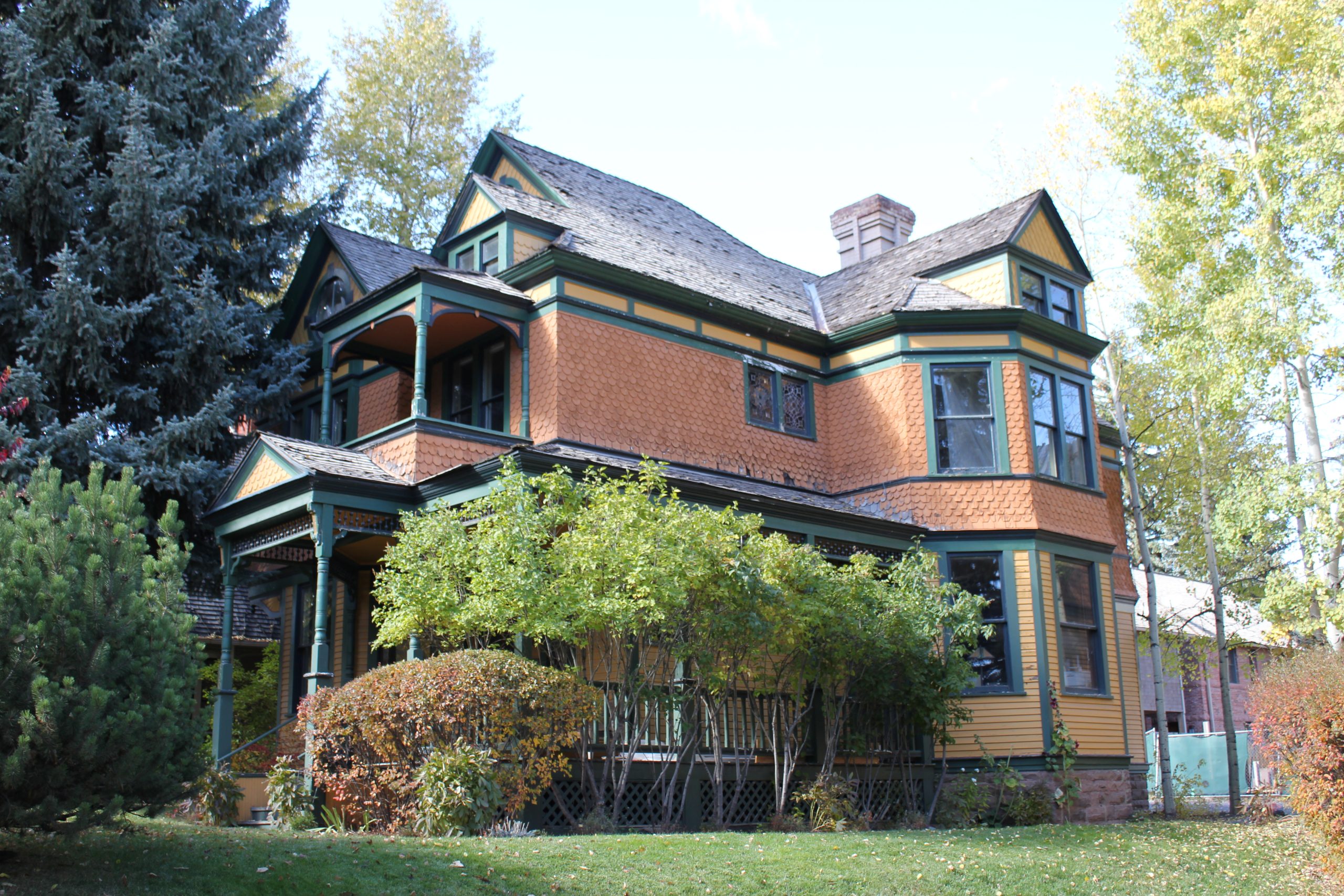
The Smith-Elisha House Aspen is a Queen Anne jewel on West Main Street, nicknamed the “Christmas Tree House” for its festive silhouette. Built in the 1890s silver boom and preserved by immigrant hotelier Mansor Elisha, it embodies Aspen’s resilience, diversity, and adaptive reuse.
Property Snapshot
-
Location: 320 West Main Street, Aspen, CO 81611
-
Developer/Original Owner: Eben Smith, mining magnate, ca. 1890
-
Designation: Listed on the National Register of Historic Places (NRHP) in 1989 (Ref# 87002121)
-
Current Use: Adaptively reused for office space since the 1990s
-
Year Built: circa 1890
-
Style: Queen Anne residence, towerless yet richly detailed
-
Zoning: Historic West Main heritage-commercial (adaptive reuse)
Did You Know?
The Smith-Elisha House Aspen is one of the finest examples of Queen Anne architecture in Colorado. History Colorado calls it “one of Aspen’s best examples of the Queen Anne style,” thanks to its multi-gabled roof, wraparound porch, and intact barn with cupola. Source: History Colorado
Why It Matters
-
Heritage: The Smith-Elisha House Aspen connects today’s Aspen to its silver boom origins, its immigrant legacy, and its preservation movement.
-
Real estate: As an award-winning adaptive reuse, it shows how historic properties can evolve into valuable office spaces while enhancing Aspen’s cultural identity and tourism.
History Through the Decades
-
1890s Boom: Eben Smith, a mining magnate, built the Smith-Elisha House Aspen at the height of prosperity. Its grandeur reflected Aspen’s ambition.
-
Quiet Years: After the silver crash of 1893, Aspen’s population collapsed. Mansor Elisha—immigrant hotelier, Hotel Jerome owner, and future mayor—bought and safeguarded the property. His stewardship preserved it through lean decades.
-
Preservation & Reuse: In 1989 the property was listed on the National Register of Historic Places. In 1990 it earned a Colorado Preservation Award for adaptive reuse, proving historic spaces could thrive as modern offices.
Architectural Features
The Smith-Elisha House Aspen demonstrates Queen Anne exuberance without a tower:
-
Multi-gabled roofline and asymmetrical façade
-
Wraparound porch with turned posts, latticework, and gabled entry
-
Clapboard first story and flared shingles above
-
Rare oculus window with crossed muntins and keystones in the front gable
-
Projecting bays, dormers, and paired windows for dynamic silhouettes
-
Contributing barn and carriage house with cupola, part of the NRHP listing
Explore More of Aspen’s History:
Explore more about the Smith-Elisha House Aspen and other heritage properties at the Colorado Office of Archaeology and Historic Preservation. For more stories of Aspen historic homes, see Shilling–Lamb House (Victoria House)
Q1: Why is it called the “Christmas Tree House”?
A1: The nickname comes from its ornate Queen Anne gables, shingled façade, and jewel-like oculus window that evoke a decorated tree.
Q2: Who was Mansor Elisha?
A2: Mansor Elisha was an immigrant hotelier and future mayor of Aspen. He owned Hotel Jerome and preserved the Smith-Elisha House Aspen during the town’s decline.
Q3: Can the public tour the house?
A3: The property is privately used as offices after its adaptive reuse. It is not generally open for tours.
Q4: When was it added to the National Register of Historic Places?
A4: The Smith-Elisha House Aspen was listed in 1989 (NRHP Ref# 87002121).
Q5: Why is it significant in Aspen real estate?
A5: Its adaptive reuse showcases how historic homes can provide commercial value while preserving cultural heritage.
Sources:
-
Beall, J. (2011, October 14). Smith–Elisha House [Photograph]. Wikimedia Commons.