
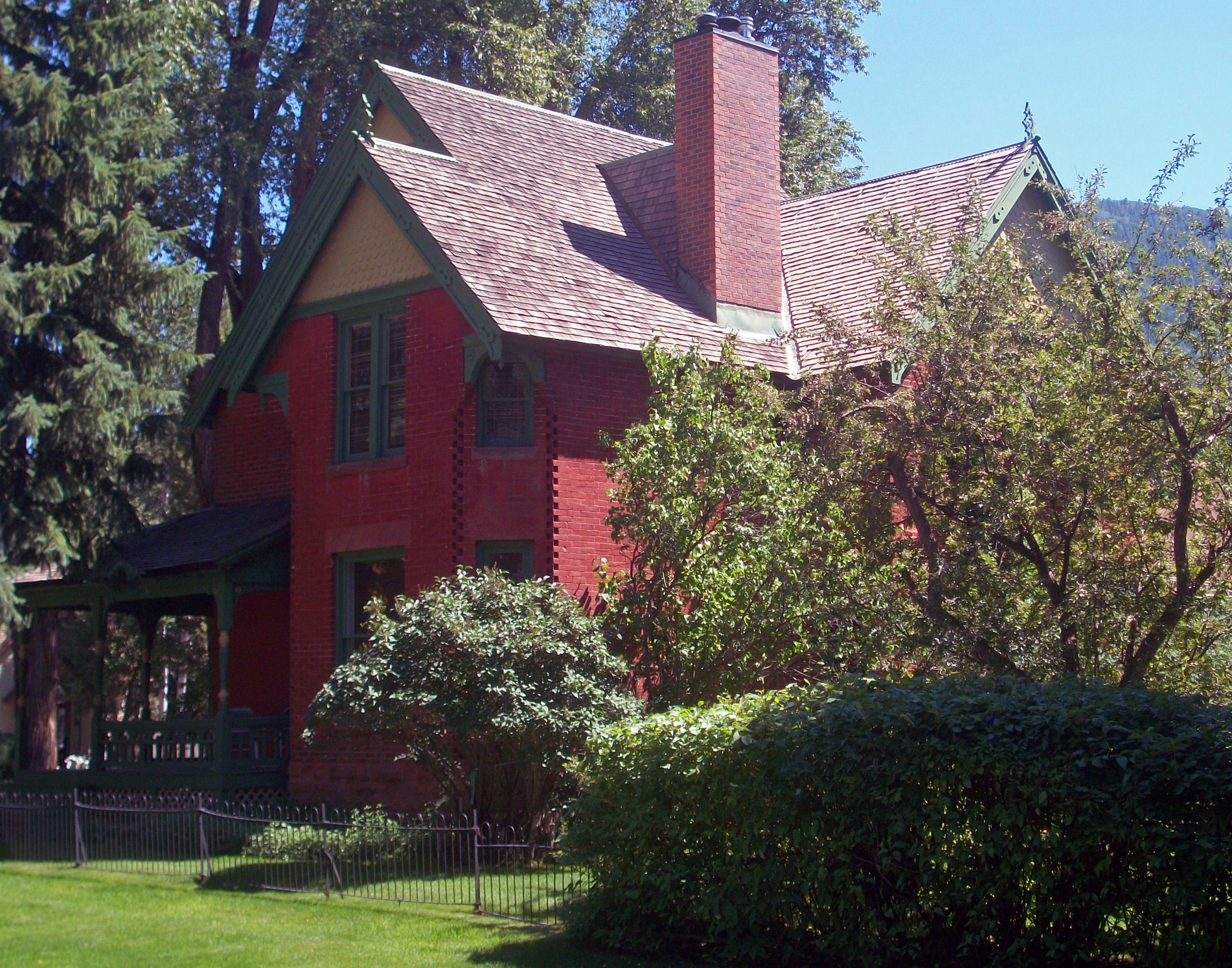
Elegant Heritage Home: Bowles–Cooley House Aspen
At the quiet corner of West Francis and North First Streets, the Bowles–Cooley House Aspen rises as a Queen Anne jewel of the West End. Built in 1889 during Aspen’s silver boom, this Victorian treasure has survived economic collapse, shifting eras, and modern reinvention—standing as one of the city’s most remarkable heritage homes.
Property Snapshot
Location: Corner of West Francis & North First Streets, West End, Aspen, CO
Developer / Architect: Ryland R. Bowles, lumber merchant
Designation: National Register of Historic Places (NRHP Ref# 87000188, listed 1987)
Current Use: Private residence
Year Built: 1889
Style: Queen Anne (brick)
Zoning: Residential, West End historic district
Did You Know?
The Bowles–Cooley House Aspen features a rare quarter-sawn limed oak floor, designed with angled boards that shorten toward the center. This design detail—more typical of metropolitan mansions than frontier towns—shows the sophistication brought to Aspen’s mining-era architecture (Aspen Historic Preservation Inventory, aspen.gov).
Why It Matters
The Bowles–Cooley House Aspen is more than a Victorian survivor—it is a living link between Aspen’s mining boom and its later ski-town revival. While many Victorian homes were lost to fire, neglect, or redevelopment, this one endured the “Quiet Years” after the silver collapse.
Culturally, the house represents Aspen’s resilience. It shows how a mining community built with ambition adapted to economic downturn and later embraced a new identity as a ski destination. From a real estate perspective, heritage homes like this demonstrate that historic architecture is not just a relic—it can be a valuable, lived-in property that continues to contribute to the neighborhood’s prestige and desirability. For buyers, the West End remains Aspen’s most sought-after residential district, and the survival of properties like the Bowles–Cooley House elevates the entire area’s character and market value.
History Through the Decades
1889: Built by Ryland R. Bowles, a successful lumber merchant, to showcase quality timber and fine craftsmanship.
1891: Purchased by William Cooley, a mining lawyer whose name the house still carries.
1893–1940s: Survived Aspen’s “Quiet Years” after the silver crash, when many grand homes were abandoned.
Mid-20th Century: Became home to Red Rowland, Aspen Skiing Company vice president, tying the Bowles–Cooley House Aspen to the ski industry era.
1987: Listed on the National Register of Historic Places, ensuring its preservation as part of Aspen’s West End heritage fabric.
The surrounding neighborhood—the West End—has since become one of Aspen’s most desirable enclaves, where Victorian homes sit alongside contemporary residences. In this context, the Bowles–Cooley House Aspen is not just a survivor; it’s a cornerstone of the district’s architectural and cultural identity.
Architectural Features
The Bowles–Cooley House Aspen remains one of the largest early brick residences in the West End, showcasing:
Asymmetrical massing with steep cross-gables
Wraparound porch with turned balusters
Decorative fish-scale shingles, vergeboards, and ball finials
Arched stained-glass entry window
Interiors of golden oak and hand-grained mahogany
Quarter-sawn oak floors laid in a geometric pattern matching the angled walls
Explore More of Aspen’s History:
Step inside Aspen’s architectural past—explore more heritage properties like the Berger Cabin and see how history continues to shape Aspen real estate today.
Q1: Is the Bowles–Cooley House Aspen open to the public?
A1: No, it is a private residence and not available for public tours.
Q2: Why is the flooring inside the Bowles–Cooley House Aspen unique?
A2: It features a rare quarter-sawn limed oak floor with angled boards, an elegant touch uncommon in frontier towns.
Q3: What era does the Bowles–Cooley House Aspen represent?
A3: It reflects the Silver Boom era of the 1880s and Aspen’s resilience through the “Quiet Years.”
Q4: Who lived in the Bowles–Cooley House Aspen?
A4: Originally built by Ryland R. Bowles, later owned by William Cooley, and eventually home to ski-industry leader Red Rowland.
Q5: What protections safeguard the Bowles–Cooley House Aspen today?
A5: It is listed on the National Register of Historic Places and recognized as a local landmark in Aspen’s West End.
Sources:
National Register of Historic Places – listing reference #87000188 (NPS.gov NRHP database)
- Wikimedia Foundation. (n.d.). Bowles–Cooley House, Aspen, CO [Photograph]. Wikimedia Commons.