
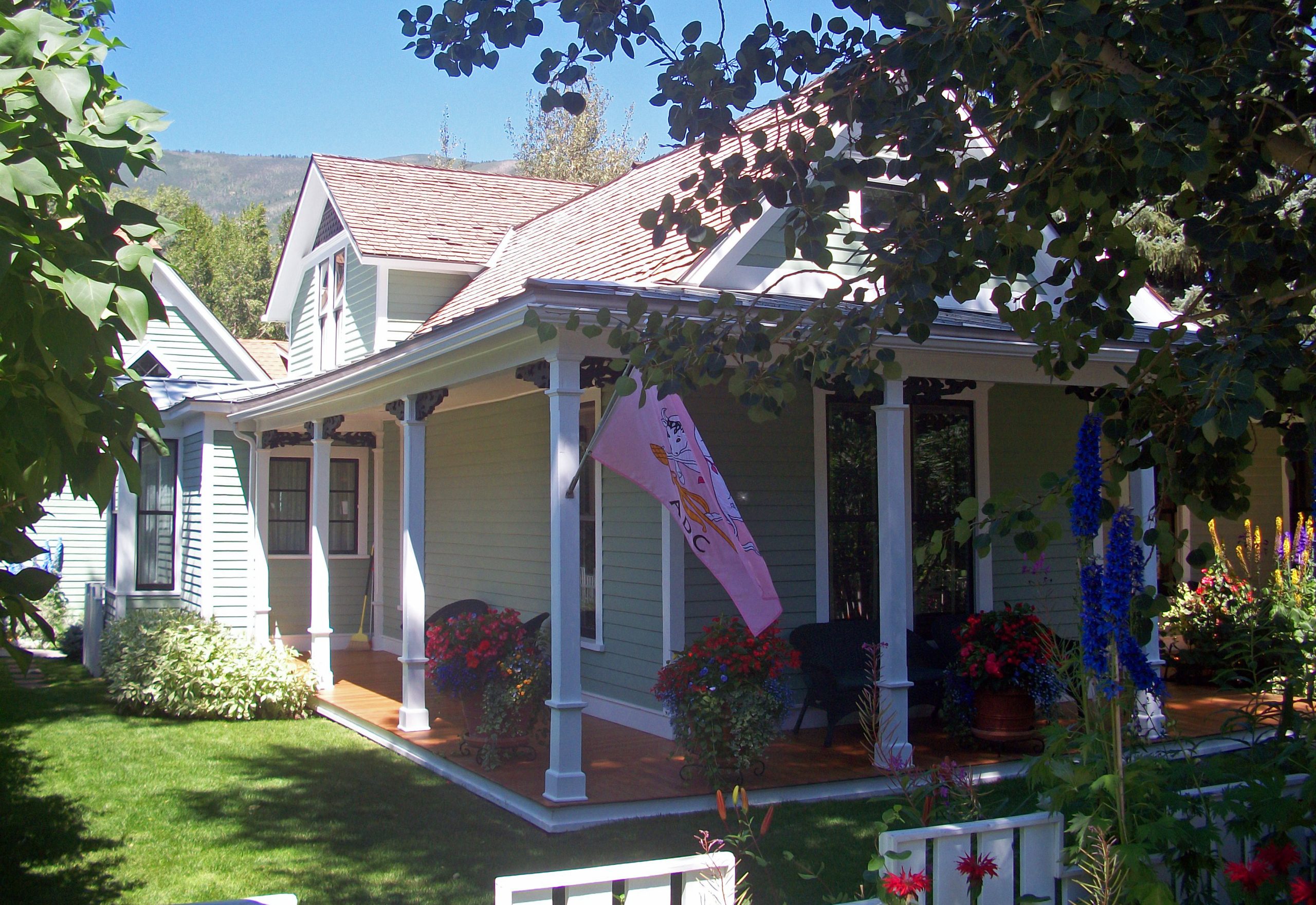
Preserved Aspen Victorian Heritage Home: Hallett House
Aspen Victorian heritage home Samuel I. Hallett House offers a rare glimpse into the town’s transformation from silver-boom mining camp to refined mountain community. Built over an original 1885 log cabin, this historic residence remains one of Aspen’s most remarkable landmarks.
Property Snapshot
-
Location: 432 W. Francis Avenue, corner of W. Francis & N. Fourth Sts., Aspen, Colorado
-
Developer/Original Builder: Thomas Anson (c. 1885 cabin); expanded by Samuel I. Hallett (c. 1892)
-
Designation: National Register of Historic Places (NRHP #87000155, listed March 6, 1987)
-
Current Use: Private residence
-
Year Built: c. 1885 (log cabin), remodeled c. 1892 into Victorian frame-clapboard home
-
Style: Victorian (timber-frame with clapboard siding, fish-scale shingles, wraparound porch)
-
Zoning: Residential, West End Aspen historic district (locally designated landmark)
Did You Know?
During a late-1940s renovation, the original 1885 log cabin walls of this Aspen Victorian heritage home were discovered intact beneath the siding. Workers also found a rare cast-bronze fireplace with bas-relief detail—an uncommon feature in Aspen’s historic housing stock. (Source: NPS Nomination Form)
Why It Matters
The Samuel I. Hallett House is more than an address—it is a preserved Aspen Victorian heritage home that embodies the city’s layered identity. Its log-cabin core illustrates Aspen’s rugged mining roots, while the Victorian exterior represents the ambition of residents who reshaped the community during the silver boom. For real estate and preservation enthusiasts, the home is a living reminder of Aspen’s resilience.
History Through the Decades
-
c. 1885–1888: Miner Thomas Anson builds a modest hand-hewn log cabin during Aspen’s silver-rush expansion.
-
1892: Samuel I. Hallett, superintendent of the Smuggler Mine, remodels it into a Victorian residence with clapboard siding, decorative gables, and a wraparound porch—transforming the cabin into an Aspen Victorian heritage home.
-
1893: The silver crash devastates Aspen, but the Hallett family retains the property until 1935.
-
1940s–1960s: Renovations reveal the log-cabin walls and preserve the cast-bronze fireplace. Modern extensions follow, yet the historic character endures.
-
1987: Recognized nationally with listing on the National Register of Historic Places.
- Today, the Hallett House is more than just a residence; it is a living testament to Aspen’s Victorian heritage, inspiring visitors and locals alike to value preservation and timeless design.
Architectural Features
-
Original Log Cabin Core: Hand-hewn log walls from 1885, concealed beneath the Victorian shell.
-
Wraparound Porch: Elevated tiled deck with square pillars, balancing elegance and practicality.
-
Victorian Touches: Clapboard siding, L-shaped gabled roofline, fish-scale shingles, casement and one-over-one sash windows.
-
Cast-Bronze Fireplace: A rare bas-relief fireplace, anchoring the home’s preserved Victorian interiors.
-
Hallett Carving: A stone mounting block inscribed “Hallett” still stands near the street.
Explore More of Aspen’s History:
For more stories of Aspen historic Victorian homes, visit the Aspen Historical Society’s Victorian architecture tours and explore the West End’s preserved treasures. See D.E. Frantz House.
Q1: What makes the Samuel I. Hallett House unique among Aspen Victorian heritage homes?
A1: It preserves a log-cabin core from 1885 beneath its Victorian exterior, making it both rare and historically significant.
Q2: Is the Hallett House open for tours?
A2: No. This Aspen Victorian heritage home is a private residence.
Q3: Why is the Hallett House important in Aspen’s history?
A3: It represents Aspen’s transition from a rough mining town to a refined Victorian community.
Q4: What architectural features define this Aspen Victorian heritage home?
A4: Its wraparound porch, clapboard siding, fish-scale shingles, and cast-bronze fireplace all showcase Victorian design layered over mining-era origins.
Q5: When did the Samuel I. Hallett House become officially recognized?
A5: In 1987, it was added to the National Register of Historic Places.
Sources:
-
Wikimedia Foundation. (2024, November 8). Samuel Hallett House, Aspen, CO [Photograph]. Wikimedia Commons. Retrieved September 9, 2025, from https://commons.wikimedia.org