
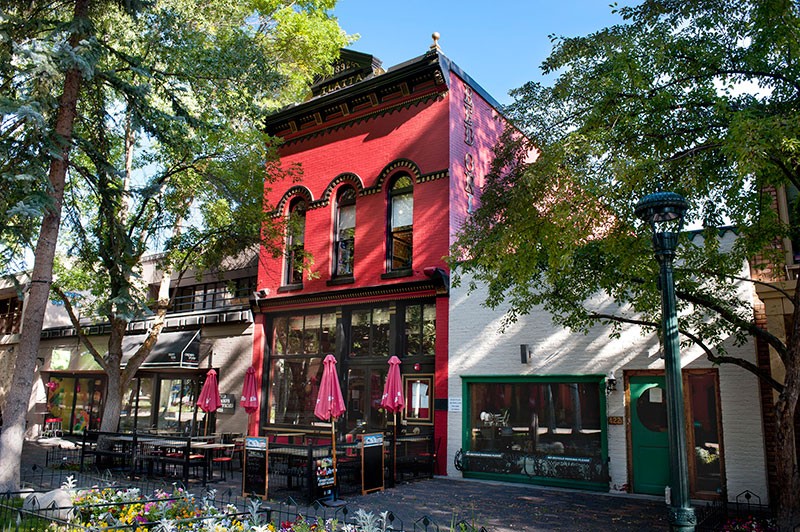
The Red Onion Aspen: Where History Meets the Bar
The Red Onion Aspen has been the city’s social anchor for over 130 years. Built in 1892 during the Silver Boom, this Italianate saloon has survived Prohibition, Aspen’s “Quiet Years,” and even a stray bullet—emerging as a living relic of Aspen’s heritage.
Property Snapshot
-
Location: 420 E. Cooper Ave, Aspen, CO 81611
-
Developer: Thomas Latta (Alderman, 1892)
-
Designation: NRHP #87000185 (Listed 1987)
-
Current Use: Restaurant & Bar (currently closed, with reopening efforts underway)
-
Built: 1892
-
Style: Italianate / Late Victorian
-
Zoning: Commercial Core (CC)
Did You Know?
A bullet hole from 1899 still scars the original mahogany bar after a city policeman’s accidental discharge. Above the bar, two Hungarian gypsy figurines—untouched for over a century—remain as whimsical guardians of Aspen’s past. Source: History Colorado – New Brick (Red Onion)
Why It Matters
The Red Onion Aspen is more than a saloon—it’s Aspen’s story in brick and wood. Since 1892, it’s been the meeting ground for miners, musicians, moguls, and misfits. Today, its presence on Aspen’s pedestrian-only Cooper Avenue mall makes it both a cultural landmark and a prime commercial core property.
A Glimpse Back in Time
-
Opened in 1892 as The Brick Saloon by alderman Thomas Latta
-
Survived Aspen’s post-1893 “Quiet Years” when population dwindled after the silver crash
-
Operated through Prohibition, shifting to food service
-
Hosted legendary performers including Billie Holiday and John Denver during Aspen’s mid-century cultural boom
-
Early upstairs brothel added to its colorful past
-
Became a pillar of Aspen’s après-ski and music scene in the 20th century
-
Protected since 1987 under the National Register of Historic Places
Architectural Features
The Red Onion Aspen exemplifies Late Victorian Italianate design:
- Exterior: Brick façade with dentilled cornices, round-arched windows, and ornate pediment inscribed with “1892” and “T. LATTA.”
- Interior: Original pressed tin ceilings, clay tile floors (like those in Hotel Jerome), and the iconic mahogany bar—complete with bullet hole.
- Decorative detail: Hungarian gypsy figurines that have watched over Aspen’s revelers for more than a century.
Aspen’s Living Saloon Through the Decades
The Red Onion Aspen mirrors the city’s economic and cultural cycles:
-
Gilded Age Boom (1892–1893): Opened at the height of Aspen’s silver mining prosperity.
-
Quiet Years (1894–1940s): Endured while much of Cooper Avenue went silent.
-
Cultural Renaissance (1940s–1970s): Hosted music legends and became a countercultural hub.
-
Modern Landmark (1987–Present): Listed on the NRHP and woven into Aspen’s pedestrian core, it remains a touchstone of heritage real estate.
Today, while closed, community efforts aim to restore and reopen The Red Onion Aspen—bringing history back to life.
Explore More of Aspen’s History:
Discover Aspen’s historic landmarks and learn how its past continues to shape the city’s real estate today at the Hotel Jerome.
Q1: What is The Red Onion Aspen known for?
A1: It’s Aspen’s oldest saloon, famous for its bullet-marked bar, Hungarian figurines, and role as a cultural hub for over 130 years.
Q2: When was The Red Onion Aspen built?
A2: It was built in 1892 during Aspen’s Silver Boom.
Q3: Who founded The Red Onion?
A3: City alderman Thomas Latta developed it as The Brick Saloon before it became The Red Onion.
Q4: Is The Red Onion Aspen on the National Register of Historic Places?
A4: Yes. It was listed in 1987 under NRHP #87000185.
Q5: Can I visit The Red Onion Aspen today?
A5: The bar is currently closed, but efforts are underway to reopen it as part of Aspen’s vibrant downtown.
Sources:
- National Park Service – NRHP Nomination Form
- History Colorado
- City of Aspen
- Woodham, Rebecca. “Red Onion (New Brick Saloon).” Clio: Your Guide to History. October 26, 2017. Accessed September 9, 2025. The Clio